Our Work
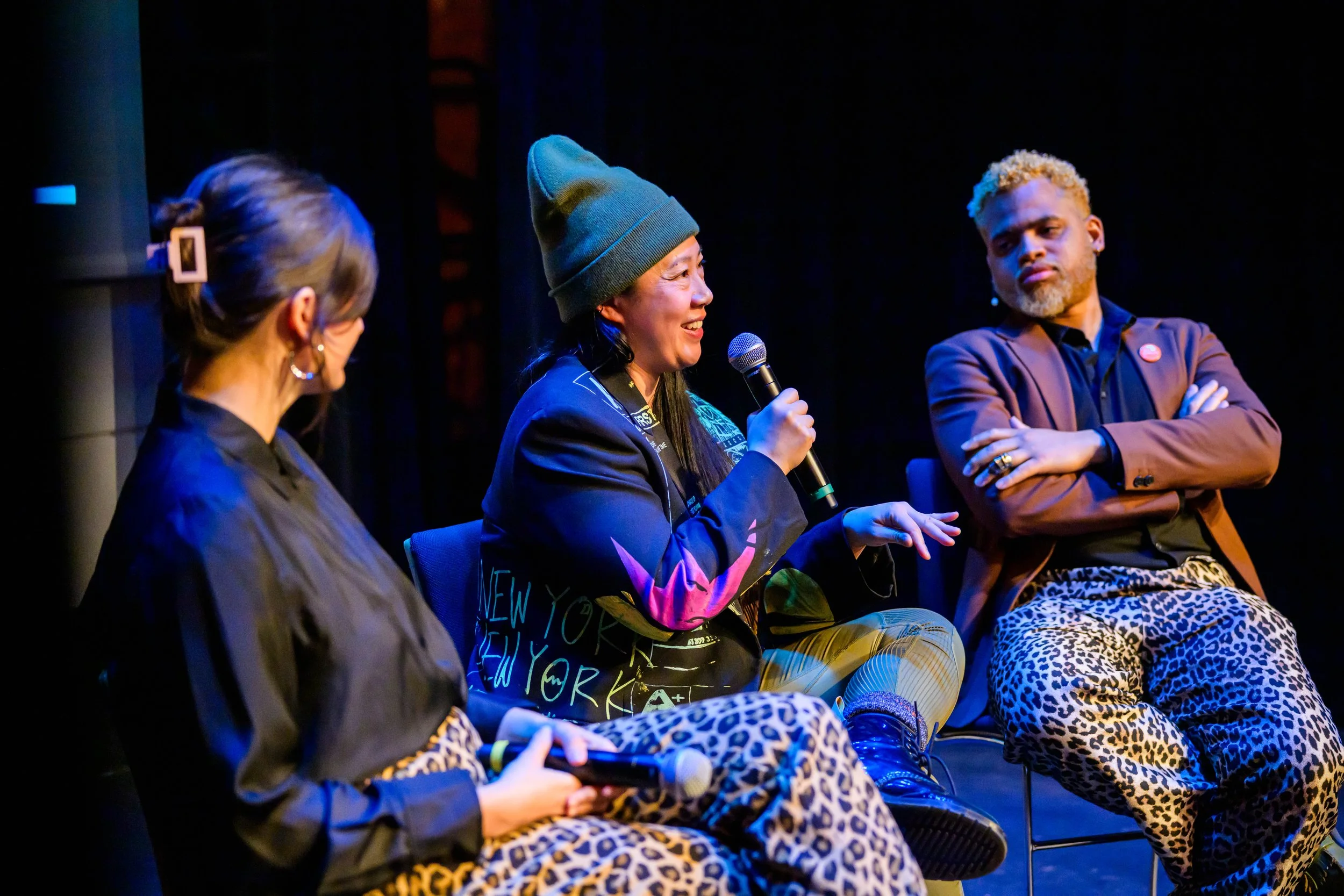
The Poem Made Between Us
Conversation becomes poem. Poem becomes public record.
A participatory media, event, and public-art series built around what happens when two people meet with enough curiosity to create something together. Through filmed conversations, live encounters, multilingual poetry, and evolving installations, participants exchange stories about identity, home, memory, place, and the futures they imagine before those encounters are translated into original poems. Each poem becomes both a gift and a record of the encounter—building an expanding archive of the people, stories, and possibilities that exist between us.
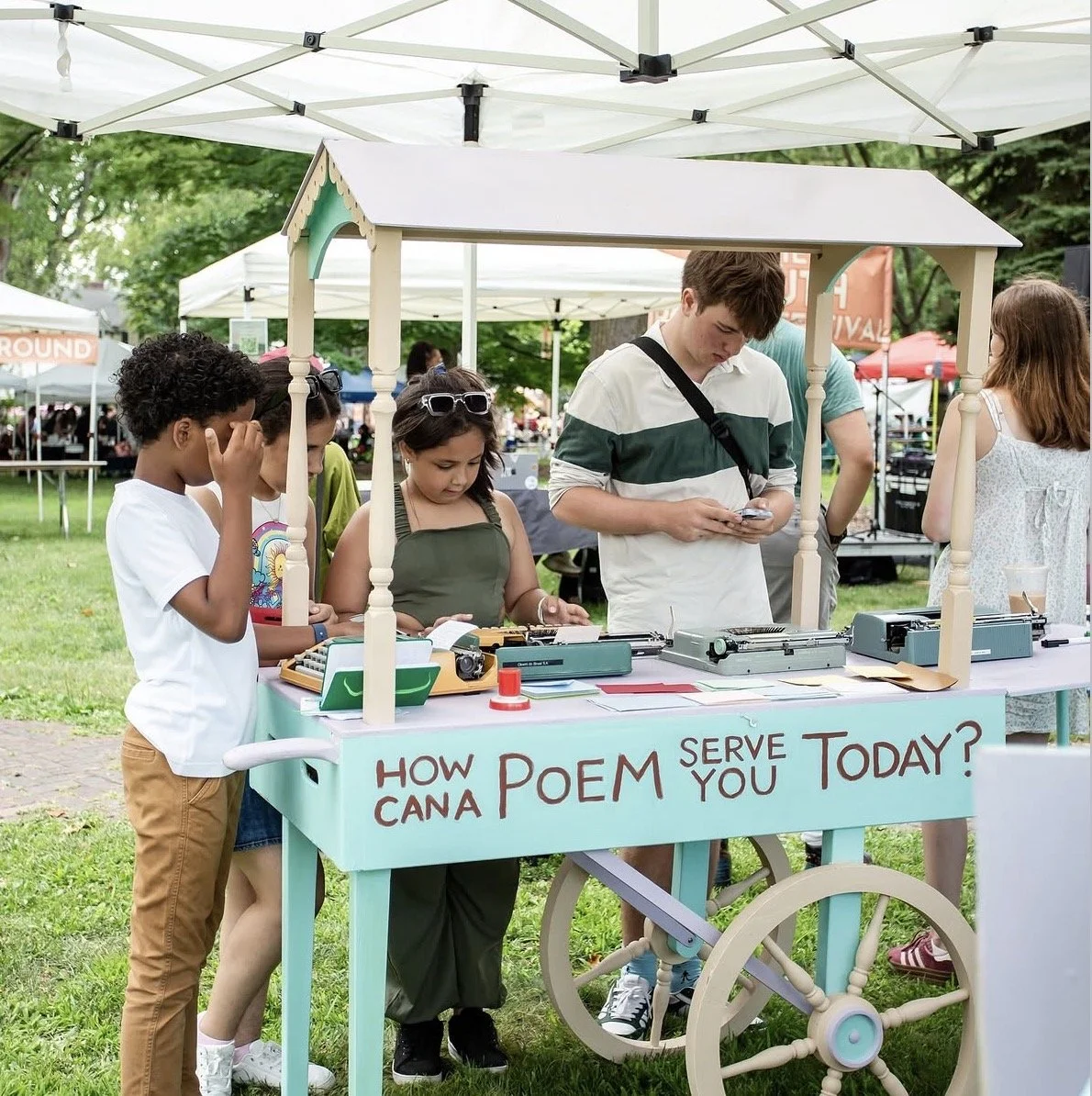
People’s Poetry Cart
A mobile public poetry practice built around encounter and exchange.
The People’s Poetry Cart brings poetry out of traditional literary spaces and directly into museums, festivals, streets, parks, and community gatherings. Visitors stop, talk, share something of themselves, and receive an original poem created through that encounter—transforming poetry from something audiences simply consume into something made through relationship. Designed to travel, the Cart functions as a tiny mobile cultural institution: part writing desk, part installation, part gathering place, and part experiment in what can happen when poetry appears unexpectedly in public life.
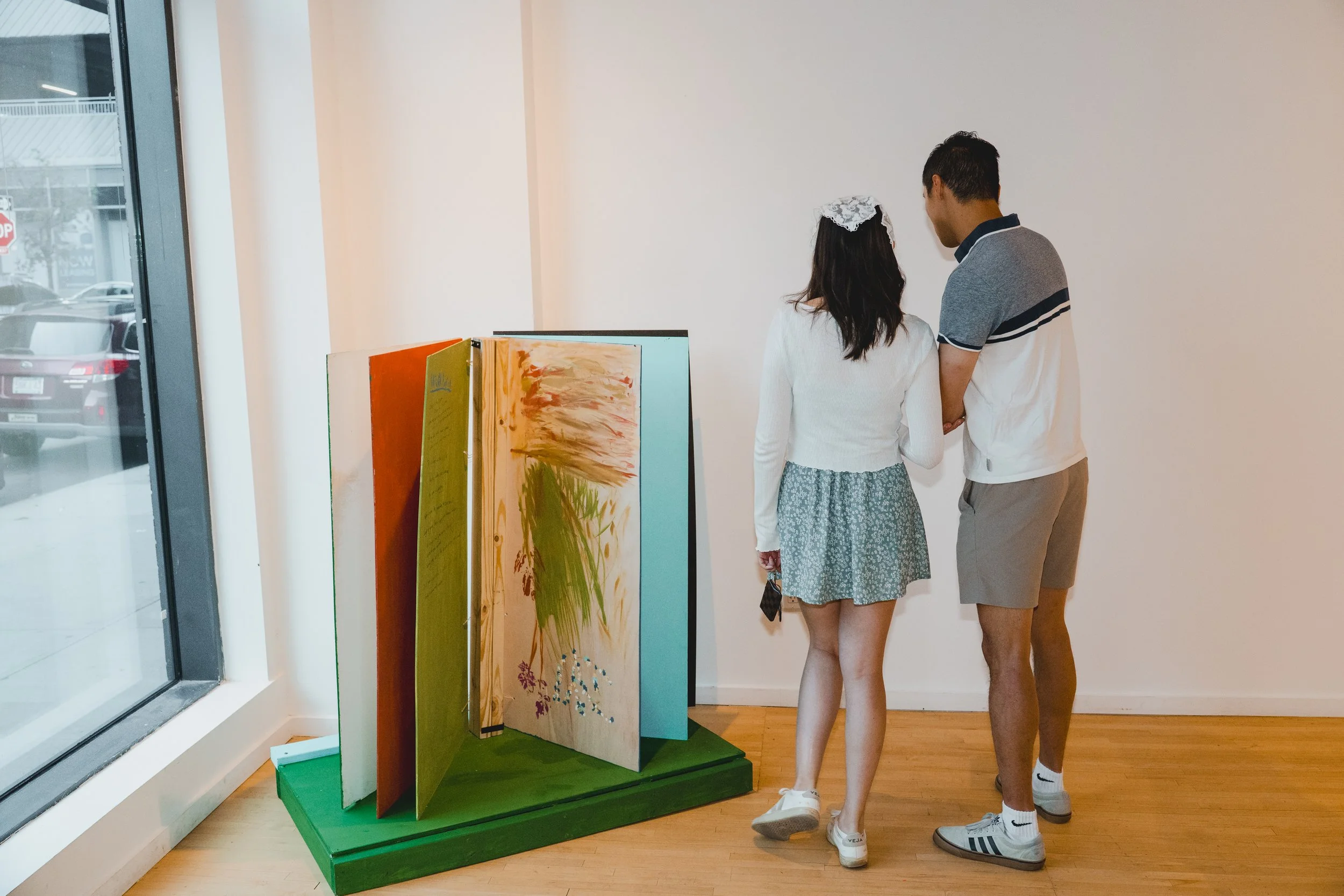
Eco Mythologies
An evolving body of sculptural and participatory work investigating how people understand their relationship to the natural world and what new ecological stories we might create together. Through human-scale books, tactile materials, public prompts, sound, writing, found objects, and audience intervention, each installation invites visitors to physically alter the work and leave something for the people who encounter it next. Rather than presenting a finished environmental narrative, Eco Mythologies asks communities to become co-authors of the myths, memories, warnings, and possibilities we carry into the future.
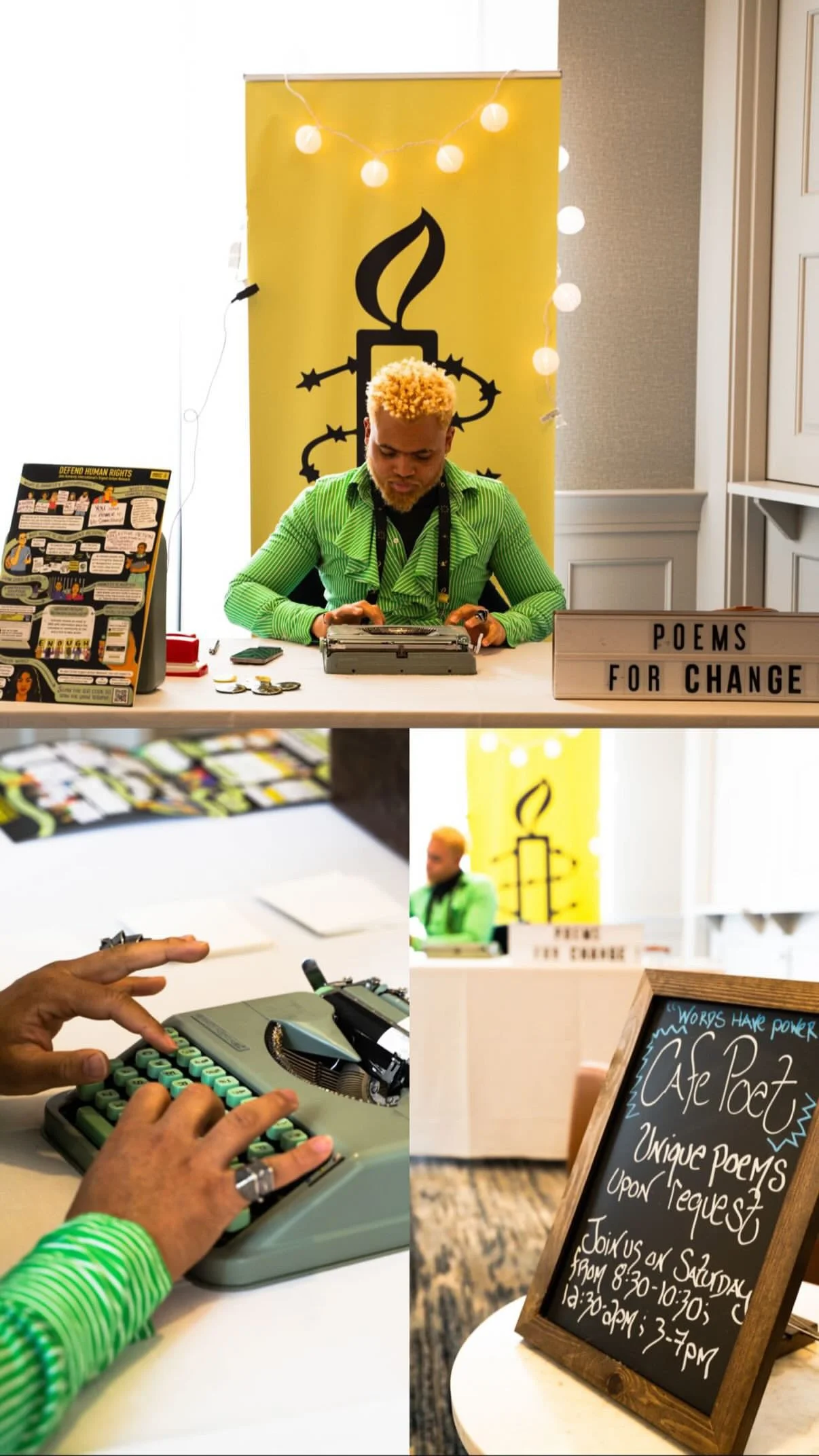
Human Rights + Advocacy
Elysium uses poetry, storytelling, education, and collaborative making to turn human rights from an abstract framework into something people can understand, express, and act upon. Our approach grows from practices including free public writing circles, neighborhood mutual-aid and resource distribution, postcolonial poetry workshops, youth storytelling, solidarity letters and postcards, campaign and advocacy training, Black arts programming, public dialogue, and collaborative art builds. By pairing education with creative participation and tangible opportunities for action, Elysium creates accessible pathways for people to tell their own stories, build solidarity, develop advocacy skills, and recognize themselves as active participants in shaping their communities and public life.

Elysium develops creative programs that connect people more deeply with place, land, and the living world. Building from practices including tree stewardship, eco-poetry and climate-imagination workshops, solarpunk writing, community exhibition tours, public environmental storytelling, and participatory projects like Climate Haikus, we combine artistic practice with hands-on ecological learning and care. Whether writing alongside trees, responding to climate art, creating low-waste collaborative works, or imagining radically different environmental futures, participants are invited to move from observing ecological challenges toward developing their own language, relationships, and practices of stewardship.